
Nepal regulatory guide
Clinical trial registration in Nepal: NCTR and WHO registries
How the Nepal Clinical Trials Registry (NCTR) relates to WHO's registry network, why journals may also need a Primary Registry record, and how registration differs from ethics approval.
Source-based guidance · not a regulatory determination
Explore all insights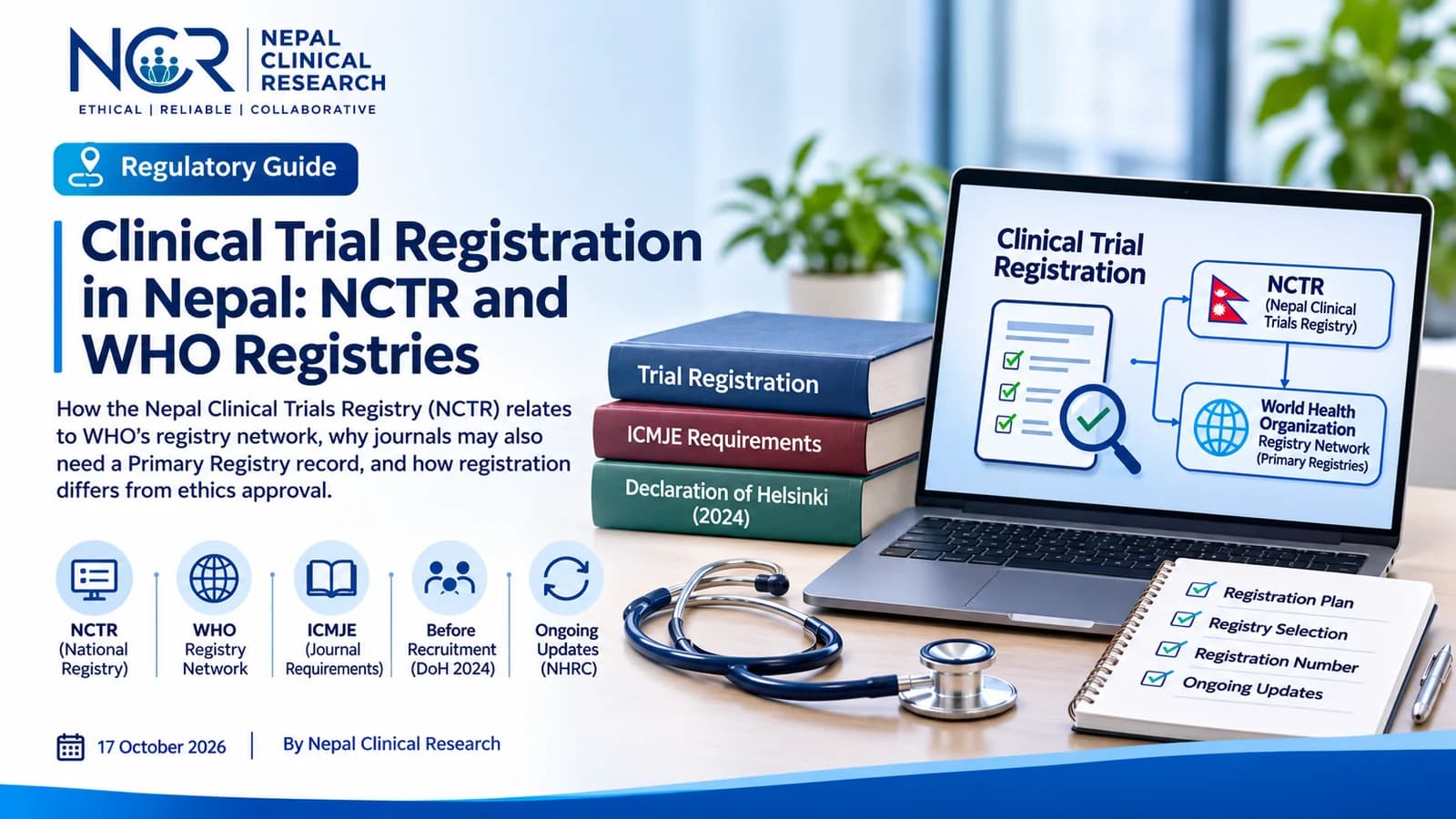
1. Registration is its own step
Trial registration makes a study publicly identifiable. It is separate from ethics review, DDA trial permission and institutional permission, and it does not authorize research or recruitment. Plan it as its own workstream with an owner and a record of the registration number.
2. The Nepal Clinical Trials Registry (NCTR)
NHRC describes the Nepal Clinical Trials Registry (NCTR) on its project page and links to npctr.nhrc.gov.np. The project's stated objective is central access to identifiable trial records, and its expected outputs include participation as a WHO Primary Registry. That is an aim, not recognition already granted.
3. How WHO classifies the Nepal registry
WHO lists Nepal under "Other registries" in its clinical trials registry network, separately from its Primary Registries. WHO notes that records in these other registries do not, on their own, meet ICMJE requirements; the trial also needs to be in a Primary Registry or an ICMJE-approved registry. Check WHO's current lists when you plan the study, because classifications can change.
4. Choose the registration route before recruitment
Decide early which registries the trial needs, so the registration number is available for submissions and publications.
- National registration with NCTR, as NHRC currently requires or recommends for the study
- A WHO Primary Registry or ICMJE-approved registry if you plan to publish in journals that follow ICMJE
- Sponsor or funder requirements for particular registries
- Consistent titles, identifiers and summaries across every registry record
5. Why registration before recruitment matters
The Declaration of Helsinki (2024) calls for research involving human participants to be registered in a publicly accessible database before the first participant is recruited. Registering late can create problems with ethics expectations and publication. Build registration into the start-up plan rather than leaving it until the site is ready.
6. Keep records current after approval
Update registry entries when recruitment status, sites, amendments or results change. Track registry updates alongside NHRC's continuing obligations, such as annual progress reports and extension applications at least one month before the approved study period ends, which section 3.5 of the 2022 guidelines describes.
Common questions
Clarify the scope.
Does registering a trial in Nepal authorize recruitment?
No. Registration makes the trial publicly identifiable. Recruitment requires the applicable ethics, DDA and institutional decisions.
Is the Nepal Clinical Trials Registry a WHO Primary Registry?
Not on WHO's current lists. WHO lists Nepal under Other registries, and NHRC describes Primary Registry participation as an expected output of the project.
Is NCTR registration enough for journal publication?
Often not on its own. WHO notes that records in Other registries also need to be in a Primary Registry or an ICMJE-approved registry to meet ICMJE requirements.
Editorial disclaimer. This article is general guidance based on published NHRC and WHO sources. It is not a regulatory determination. Confirm the current registration route and requirements with NHRC and your target journals before recruitment. Last researched: 17 October 2026.
This guide is educational and based on the public sources it cites. It has not been reviewed by an independent regulatory specialist, and it does not replace a protocol-specific decision by NHRC, DDA or the responsible institution. To report an error or an out-of-date requirement, email info@nepalclinicalresearch.com.
Sources and further reading
Additional Resource
Related pages

A study-specific conversation
Let’s clarify what your study needs.
Start with a clear brief. Shape the right support around your study.